
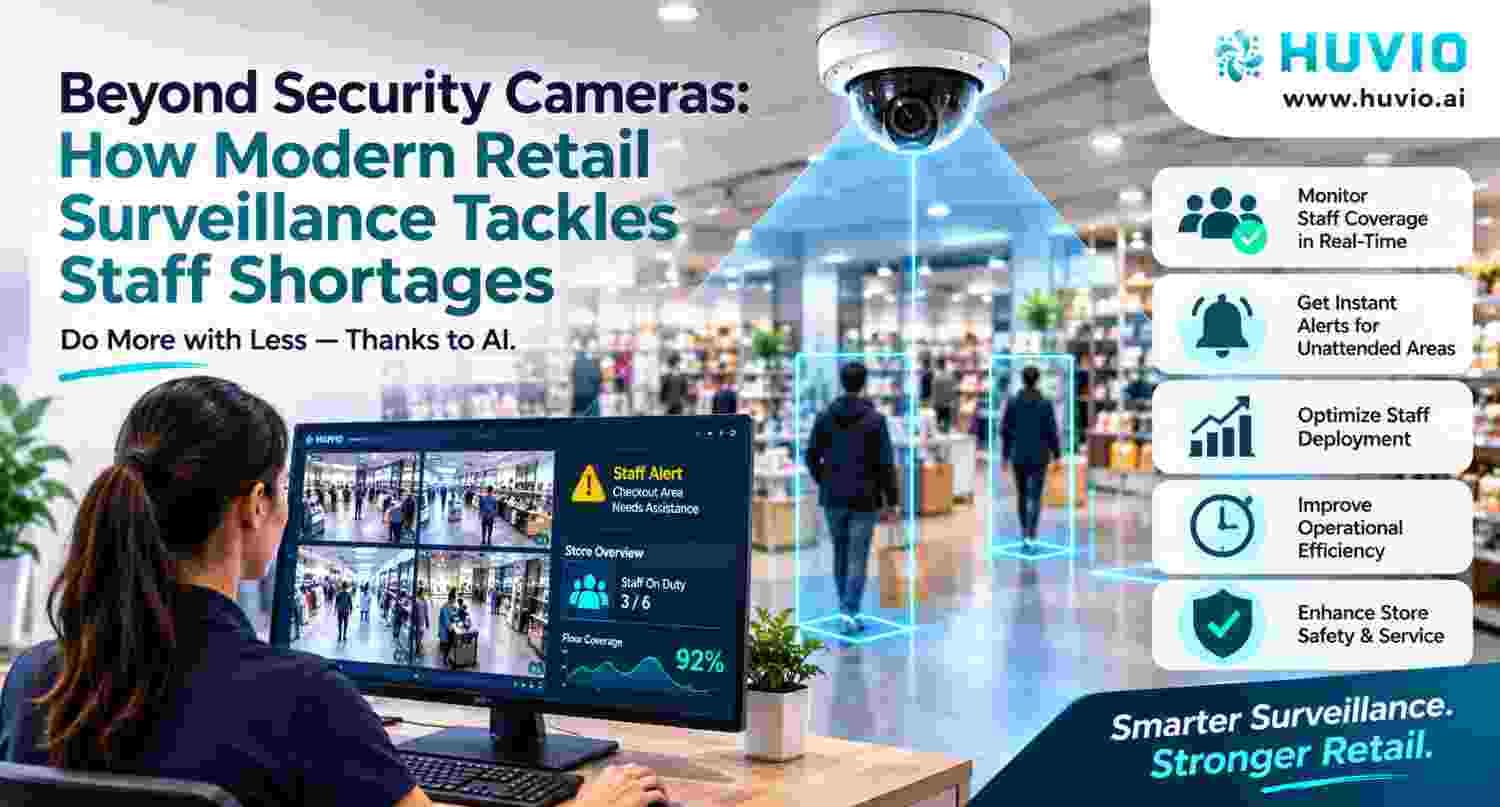
The United States faces a significant retail theft issue, resulting in annual losses exceeding $31 billion. Employee theft alone accounts for nearly $15 billion, while shoplifting contributes close to $10 billion. Shoplifting incidents during the first six months of 2024 rose by 24%, which made security threats more dangerous for retailers. The current situation in stores has produced two major problems, which include financial damage and rising safety threats because violent attacks have increased by 14% during the past year and caused more than 500 fatalities. Retailers now use advanced retail theft prevention technology that exceeds basic security camera functionality because they have reduced their workforce numbers.
Modern retail surveillance operates through AI-based systems, which help organizations fight theft while enhancing operational efficiency and managing their workforce during times of personnel deficits. Security technology serves 95% of retailers who use it, while AI detection of unusual events has become essential for 78% of retail businesses. AI surveillance platforms that combine ai video surveillance analytics enable stores to enhance operational efficiency and safety through security systems that convert basic surveillance footage into useful business data.
AI Surveillance: Bridging the Staffing Gap
The retail industry faces an ongoing problem because it lacks sufficient staff members. The National Retail Federation reports that stores across the country face difficulties when trying to find suitable candidates for their available job openings. AI retail theft detection provides a functional answer through its ability to perform automated surveillance duties, which leads to hybrid or complete store operation automation. AI systems that run in real-time video feeds enable the immediate detection of activities that human operators would not be able to identify. [1][2]
Security teams can monitor multiple sites through centralized AI systems, which enable them to protect their facilities even when they cannot be physically present at each location. The system enables organizations to respond quickly to security breaches through its immediate alert system, which functions regardless of their workforce size. AI systems have achieved major success because they reduce false alarm rates by 59% while saving more than 900 work hours and lowering expenses at each site by more than $30,000. [3]The system provides immediate staff alerts through its advanced AI gun detection system, which reduces emergency response times by half.[4]
A system that still depends on employees watching each screen continuously may show the signs that retail surveillance needs AI rather than delivering meaningful relief to a lean team.
Importantly, AI surveillance complements rather than replaces human staff. By managing regular monitoring and operational insights, AI allows employees to focus on higher-value duties, increasing productivity and resilience in stores with staffing shortages. AI-powered surveillance can support this approach by helping teams prioritize alerts and operational tasks. [5]
Key AI Technologies in Modern Retail Surveillance
Retail surveillance has become a system. Retail surveillance has functions. Retail surveillance runs on AI technology:
Edge AI for Real-Time Analysis
Edge AI does not rely on servers, so the data stays on the device. The system works faster. AI security systems using edge AI reduce latency. Edge AI can spot security events or operational events as soon as they happen. Staff can act right away. Edge AI lets staff respond without delay. [6]
Behavioral Analytics with NLP
Natural Language Processing (NLP) watches the communications. Finds the patterns. I have seen Natural Language Processing (NLP) spot the phrase arrangement or the phrase, out of the books. The phrases can point to fraud or policy violations. Natural Language Processing (NLP) steps to stop the losses. [7]
Object Detection and Inventory Management
Deep neural networks enable real-time identification and tracking of products. The system generates alerts to staff members when inventory reaches its lowest point, which enables them to prevent stock outs while keeping all products available in stores. This functionality can complement retail security software by connecting security observations with everyday inventory operations. [7]
Facial Recognition
The security system identifies known shoplifters through its identification features, which use facial recognition technology. The system enhances its perimeter and in-store surveillance capabilities through artificial intelligence security cameras and AI-powered video analytics, which detect intruders, weapons, and unattended items. [8]
Anomaly Detection
AI systems identify patterns that differ from typical operational behavior through their analysis of customer actions, financial transactions, and employee work patterns. The system operates as an active defense system that defends against both theft attempts and operational performance issues. [9] [10]
Operational Benefits Beyond Theft Prevention
AI surveillance systems serve two main purposes, which include loss prevention, and they also enhance store operations and staff management. When integrated into retail store video surveillance, these capabilities can help teams assess activity across different areas of a store.
That operational role includes AI-assisted floor coverage, which can reveal busy areas where employees are needed even when there is no security incident.
Enhancing Workplace Safety
The workplace environment of retail workers exposes them to dangerous situations because they experience more than 500,000 annual work-related injuries. AI systems can automatically detect slip-and-fall incidents, which leads to immediate response and decreased workplace danger. [11][12][13]
Optimizing Staff Deployment
Queue management tools monitor checkout lines in real time to alert staff when they should start new checkout operations. The system provides fast service delivery, which reduces the probability of customers developing anger. Customer counting systems achieve 99% accuracy, which allows businesses to develop staffing schedules through direct observation of actual customer numbers instead of depending on predicted customer traffic. [15]
These counts can support retail staffing optimization by matching assignments to the periods and areas where customer demand is highest.
Improving Store Layouts and Sales
The heat map system shows which store areas draw customers while showing the areas that customers tend to stay away from. Retailers need to position their most popular items in key store areas because this placement method helps customers see the products, which results in better sales performance. The clothing retailer used AI technology to create store displays, which resulted in higher customer numbers and longer shopping times for customers. [14]
Inventory and Operational Efficiency
The system depends on AI cameras, which track inventory levels on shelves to identify absent products that activate instant restocking notifications. Staff members can take immediate action to preserve system availability, which helps them prevent lost sales and makes their work processes more efficient. [16]
Why Retailers Are Embracing AI Surveillance
Modern AI surveillance systems operate as operational amplifiers that boost the operational power of retail businesses. [17] The system helps staff members by decreasing their workload, while it minimizes false alarm occurrences, and it enables quick emergency responses and provides useful operational data. AI retail security systems work to improve employee performance instead of taking their places, so workers can dedicate their time to delivering customer service, creating strategic plans, and performing important tasks.
Retailers can achieve their best asset protection and operational efficiency through the combination of edge AI technology with behavioral analytics, object detection, and anomaly recognition systems. AI surveillance serves as an essential solution because theft and staffing shortages, as well as operational requirements, are met in this world.
Conclusion
Modern retail surveillance has developed into an essential business strategy that serves purposes that extend beyond traditional camera surveillance. AI-based systems enable retailers to fight the $31 billion theft problem while they work to solve their existing employee shortage. Stores can optimize their operations while creating safer spaces for customers through the deployment of edge AI technology, which combines behavioral analytics with object detection systems.
The system tracks queue activity and monitors inventory quantities and traffic movements through AI technology, which enables staff to automatically detect system problems. The security benefits of facial recognition technology exist, although public discussions continue about its proper implementation. AI-powered video surveillance in present times operates as an active security system that uses data to achieve three main objectives, which include cost reduction, employee protection, and enhanced customer shopping experiences.
See how AI-powered retail surveillance helps stores manage staff shortages, maintain better floor coverage, and protect operations with less manual monitoring: https://huvio.ai/
References
[3] - https://www.securitasinc.com/blog/ai-remote-guarding-security-enhancements/
[4] - https://zeroeyes.com/doing-more-with-less-how-ai-reduces-security-costs/
[5] - https://www.oversight.com/solutions/process-automation
[6] - https://milvus.io/ai-quick-reference/how-does-edge-ai-support-realtime-video-analytics
[8] - https://aijourn.com/ai-powered-object-detection-transforming-retail-inventory-management/
[10] - https://www.scylla.ai/how-artificial-intelligence-can-benefit-retail-security/
[11] - https://www.splunk.com/en_us/blog/learn/anomaly-detection.html
[13] - https://www.pentegrasystems.com/ai-powered-security-monitoring-software/slip-fall-detection/
[14] - https://visionx.io/blog/retailers-video-analytics/
[15] - https://www.counttrack.com/retail-solution/queue-management
[17] - https://newsroom.axis.com/en-us/blog/operational-efficiency-retail