
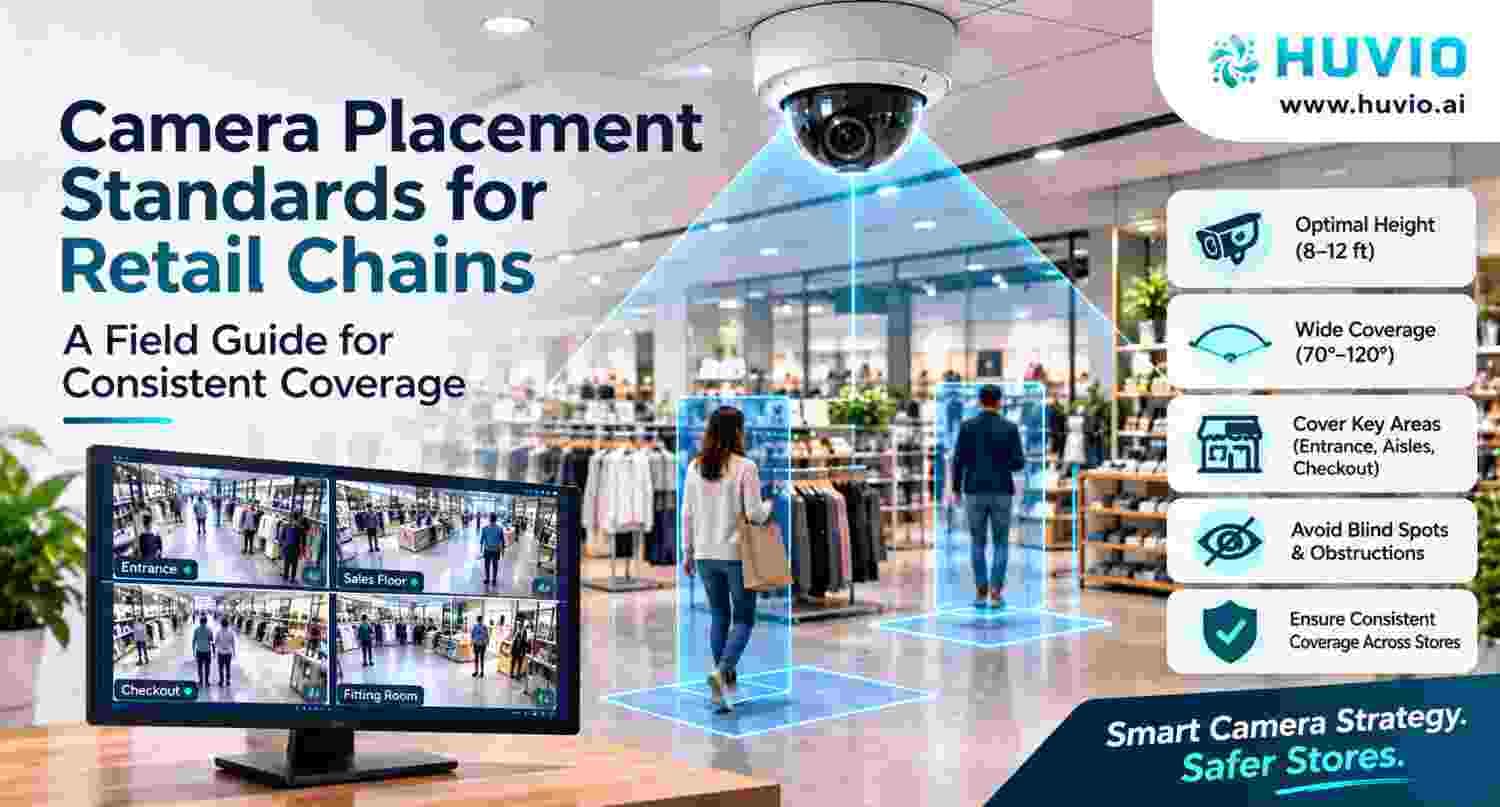
The Enterprise retail deals with camera consistency, not with quantity. Two stores under the same chain operate identical hardware, video management system (VMS), and the same loss prevention policies, but produce different outcomes. One Store quickly investigates the issues by having clear footage of the incident, while the other store escalates the incidents due to ineffective and unclear footage from the camera. Standardized retail security solutions help enterprise retailers maintain consistent camera coverage and reliable investigative outcomes across their locations.
The only difference between dealing with these situations is technology and the absence of a standardized camera. With no standardized cameras, retailers struggle with experiencing blind spots, alerts, inconsistent analytics performance, and unreliable KPIs across locations. This article will guide you about the scalable, reputable camera placement framework based on four mandatory zones, and a checklist of validation to ensure chainwide consistency.
The Chainwide Standard- 5 Non-Negotiable Rules
Enterprise retailers should establish standardized camera placement protocols to ensure consistent performance chainwide from store 1 to store 500. There are 5 non-negotiable rules, which are:
1. Outcome-based coverage
Every camera should have its defined purpose. Its placement is wrong and ineffective if it produces unclear videos. They must deter, detect, verify, and provide evidentiary details. Properly configured ai video surveillance can support these goals when camera placement matches the intended investigative purpose.
2. Consistent angles outperform higher resolution
The upgrading of the resolution of the camera cannot correct the framing. The standardized angles of cameras produce predictable investigative outcomes. The placement for angle correction should be on a consistent height, tilt, and lighting, which ensures the analytic tools.
Poor framing is also among the warning signs of outdated retail surveillance, and upgrading resolution alone will not correct a camera aimed at the wrong area.
3. Capture faces and hands
To ensure high-value investigative outcomes of footage come under two main elements, which ensure the case resolution.
· Capturing clear faces at the entrance and exit
· Capturing clear hand visibility
4. Overview of cameras from identification cameras
The overview cameras focus on the flow and context. Conversely, the identification cameras monitor the detailed evidence. Merging both functions of the overview camera and identification camera into a single camera can produce footage that can lack both context and evidence details. This distinction matters when deploying ai-powered video surveillance because analytics need footage that clearly captures the relevant activity.
5. Standardized naming and retention policies
By deploying a standardized naming convention like “Store ID-Zone-Cam”, enterprise retailers can create consistency across locations. The retention policies, export permissions, and access roles must remain consistent to support audit readiness and resolve cases rapidly.
Without consistent installation and review procedures, enterprise AI security mistakes can be repeated at every location rather than confined to a single store.
The Mandatory Zones
Four mandatory zones form the baseline of the enterprise. The coverage of additional areas should be implemented only after the four core zones are fully standardized consistently at 100% across all locations.
Zone A- Entrance and Exits
The main goal of zone A is to identify and deter. Every primary entrance and exit gate should contain at least two standardized camera angles. The first angle should focus on capturing the faces, while the other one should have a wide view for contextual movement. Consistent retail store video surveillance helps ensure both identification and contextual views are available at every entrance.
The placement of cameras should be high enough to deter tampering and low enough to capture faces. They should be positioned in a way to avoid the back and exterior lighting, which can cause blurriness. Top-of-head angles undermine identification and reduce the investigative value. Without proper positioning of standardized entry, the performance of analytics becomes unpredictable, the accuracy of facial recognition declines, and delays multi-store investigations.
KPISs
· The percentage of entries with facial images.
· Time to access entry footage for investigations.
The common failure is that the overhead cameras, which record just the crown of the head, reduce the evidentiary value.
Zone B- Self Checkouts and POS
The goal of Zone B is to detect the behaviors and verify all transactions. Precise framing is required through cameras while checking out. One of the cameras should monitor the movements of hands, the scanner, and the bagging area. One camera should focus on the interaction between the attendant and the customer. The optional queue 0-view camera will be used for dispute resolution. Clear checkout footage is important for reliable ai retail theft detection because it helps verify transactions and investigate suspicious activity.
The failure is often caused by the overhead cameras, which do not capture the barcode and behaviors correctly. When the checkout framing differs across locations, the performance of analytics becomes inconsistent. The standardization of cameras helps in reducing false alerts and shortening the time for reviewing the incidents. The common failure is to rely on a wide ceiling overview camera.
KPIs
· Reduces the loss at self-checkout
· Reduces false alerts
· Verify the cases quickly
Zone C-High-Theft Aisles and High-Value Displays
The goal of Zone C is to deter theft and capture the selection and concealment behaviours. The structured, standardized placement of cameras is required for high-risk merchandise in retail. This structured system will end the view to monitor approaches. The coverage of the mid-aisle will be used to eliminate long blind corridors. These coverages ensure the visibility of selection, concealment, and exit paths. Properly planned retail theft prevention technology depends on camera angles that capture merchandise interactions and movement through high-risk areas. The common failure is signage, shelving, and fixtures the blocking critical angles.
Good visibility in these aisles can also support AI-supported retail floor coverage, making it easier to spot high-traffic areas that lack staff attention.
KPIs
· Incident verification rate
· Coverage alignment with shrink-driven SKU list
Zone D- Back door, Receiving and Stock Room
The goal of the last mandatory zone is to prevent the internal loss and verify all deliveries. These coverages should include the backdoor cameras, mainly positioned for face and badge visibility. The placement of the camera at receiving area captures the pallet movement and door activity. Lastly, the stockroom cameras should cover the single-path access routes.
The wide-angle views do not provide accurate details. The coverage should focus on the hand visibility to resolve vendor disputes and support internal investigations. A well-configured ai video surveillance system should capture the details needed to verify deliveries and review handoffs. The failure is to capture only overviews but not clear handoff details.
KPIs
· Reduction in shrink anomalies
· Reduce vendor disputes
Optional Zones
When the mandatory zones are standardized consistently, the retailers may layer on optional ones,
· Service desk
· Cashier office
· Regulated areas
· Parking lots
Store Documentation
Every retail store should maintain the documentation package.
· Cameras list with stadardized naming
· Retention settings
· Access roles
· Post install pass/fail QA checklist
· Marked floor plan
· Images of expected camera framing\
10-minute QA Checklist
Are faces visible clearly at the entrance and exit in day or night vision?
Are the movements of hands, scanners, and bagging areas visible?
Are the high-value areas free from fixture-based blind spots?
Are the back doors covered unobstructed?
Are camera namings consistent and timestamps accurate?
Do analytic alerts march zones without noise?
If the answers to these questions vary, the standardization of cameras is not fully and accurately implemented. Consistent retail security software and validation procedures can help teams identify whether camera coverage and analytic alerts meet the required standards.
Conclusion
The placement of standardized cameras is not about the quantity; however, it is about purpose, the standardized angles, documentation, and Questions and Answers help ensure the consistency of analytics, faster investigation, and scalable SOPS across all stores or locations
Consider a structured store audit or checklist to ensure consistency across the enterprise to verify coverage across all locations. A standardized retail surveillance system can support this process by helping retailers assess coverage and maintain consistent camera placement across their stores.
Ensure every camera captures the right areas with smart placement strategies that help retailers improve coverage and strengthen security: https://huvio.ai/