
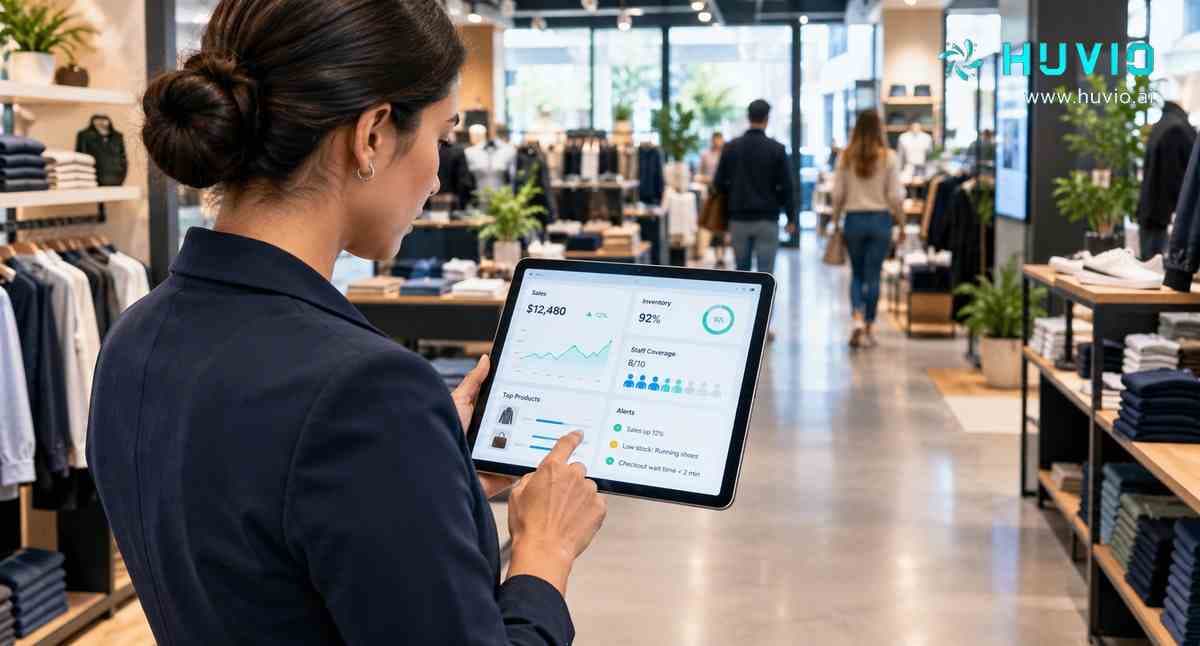
Running a retail store has never been more challenging. Customers want speedy service, well-stocked shelves, short checkout lines, and a personalized shopping experience all at once. Meanwhile, store managers handle personnel, inventory, promotions, shrinkage, and customer happiness, while AI video surveillance can help provide useful real-time visibility, frequently depending on outdated reports that arrive hours or even days late.
The reality is straightforward: by the time typical reports notify you that something went wrong, even when retail security software could surface important issues sooner, the opportunity to correct it has already passed. This is where real-time operational intelligence is transforming the game.
Using current retail operations software, businesses can monitor live shop activity, using AI-powered video surveillance where visual context is useful, analyze performance in real time, and respond to concerns before they affect sales. Instead of reacting to yesterday's difficulties, managers may make better decisions when something happens.
Let's explore how real-time operational intelligence by Huvio AI is becoming every store manager's greatest competitive advantage.
What Is Real-Time Operational Intelligence?
Real-time operational intelligence refers to the ability to collect, analyze, and act on real data from across the shop.
AI video surveillance can provide visual context for those alerts. Instead of waiting until the end of the day to analyze reports, managers get real-time alerts on what's going on on the sales floor.
This information may include:
· Customer traffic patterns
· Checkout wait times
· Employee activity
· Shelf availability
· Inventory movement
· Promotional compliance
· Security events
· Sales performance
Retail store video surveillance can support review of activity across locations. When this data is merged into a single intelligent dashboard, managers may have complete visibility into everyday operations without having to wander around the business. The result is speedier decisions, fewer operational errors, and a better customer experience.
Combining these signals creates business intelligence from retail cameras that helps explain what is happening on the floor rather than relying solely on sales reports.
Why Traditional Reporting Isn't Enough
Many retailers are still relying on daily spreadsheets or weekly reports. AI-powered video surveillance can help teams review relevant activity sooner. While these reports give insight into the past, they offer little value to managers looking to resolve issues in the present.
Think about these scenarios:
· A checkout line snakes through your store with 15 customers waiting.
· A best-selling product is sold out by noon.
· Staff is wasting valuable time in the stockroom.
· An endcap display is improperly set up.
· A spill has created a safety hazard.
Waiting for your daily report to come out tomorrow will do nothing to help resolve these issues. Lost sales, customer dissatisfaction, and wasted time add up to increased costs for the retailer.
With real-time intelligence, critical issues can be addressed and resolved before they negatively impact the business.
Better Decisions Begin with Better Visibility
Each hour, store managers make dozens of judgments. Without real-time knowledge, many of these decisions are based on assumptions.
Modern store performance analytics give managers a real-time view of shop operations, allowing them to discover problems before they worsen.
That visibility is particularly valuable for AI-guided workforce allocation, where staff coverage can change in response to customer traffic rather than stay fixed for an entire shift.
For example, managers can instantly see:
· What departments get the highest client traffic?
· Whether staffing meets customer demand.
· Which goods need replenishment?
· Areas with operational bottlenecks
· Team Productivity across Shifts
Managers might spend more time fixing problems rather than searching for them.
Retail KPI Tracking That Drives Results
Successful retail stores analyze certain indicators known as key performance indicators (KPIs). Nevertheless, evaluating these metrics after closing the doors may no longer be sufficient.
Retail security software can also help organize incident review alongside operational metrics. By implementing a retail KPI tracking system, managers can ensure they have control over their daily operations since they can see which indicators require improvement while the business is open and make necessary adjustments.
Some examples of retail KPIs include sales per hour, conversion rates, average sale, stock availability, checkout time, labor productivity, customer dwell time, and inventory accuracy.
With the help of real-time data, managers can respond quickly if one of these KPIs changes, thus preventing the emergence of serious issues. This way, KPI tracking allows businesses to turn data into action and address the detected problems right away instead of waiting for the end of the business day.
Many useful performance signals also emerge from everyday store operations between security events, including unattended counters, queue delays, and recurring service bottlenecks.
Improving Staff Productivity Without Micromanaging
One of the most difficult aspects of working in retail is effectively managing teams. Managers frequently spend hours observing staff to ensure they do duties correctly.
Real-time operational intelligence eliminates most of the manual oversight. Instead of constantly inspecting the sales floor, managers gain insight into:
· Task completion
· Employee movement
· Service response times
· Department coverage
· Peak effort periods.
This does not replace human leadership; rather, it complements it.
Managers can coach people more effectively since decisions are based on data rather than preconceptions. Employees gain from clearer expectations and better scheduling.
Responding Faster During Peak Hours
Customer traffic varies throughout the day. A business that seems calm at 10 a.m. may become packed by lunchtime.
Without live operational data, staffing frequently fails to meet demand. Advanced retail operations software enables managers to notice traffic spikes as they occur.
For instance, managers can quickly:
· Open more checkout counters.
· Move staff between departments.
· Restock in-demand items.
· Adjust the floor covering.
· Improve the customer flow.
Small operational adjustments implemented at the appropriate time can greatly enhance customer satisfaction while increasing sales.
Preventing Lost Sales Through Smarter Inventory Monitoring
Nothing can be worse for a consumer than encountering an empty shelf. Products that were unavailable for purchase not only represent a loss of revenue, but they also drive consumers to other stores.
Operational analytics can provide managers with the ability to recognize when products are low on shelves. Instead of having to make routine checks of inventory levels, managers would be notified when products need to be restocked.
As a result, shelves would be fully stocked at all times, and consumer demand would never be unfulfilled.
How AI Makes Operational Intelligence Even Smarter
Artificial intelligence offers another advantage of finding patterns that are not obvious to a human. Instead of just presenting information, an AI system analyzes the collected data about the operations of the store and points out irregularities.
Some examples of irregularities are
· unusual customer traffic,
· checkout delays,
· empty shelves where promotion displays should be,
· inventory discrepancies,
· unusual employee traffic
· potential theft issues.
Instead of getting a bunch of facts and figures, managers get advised what to do based on the data. This means that they can address the issues that are the most pressing and have the most significant effect on the store's performance.
The Future of Retail Management Is Real-Time
Retail is becoming more rapid, competitive, and data-driven. Managers who base their decisions solely on past reports are always one step too late.
Those who leverage the power of retail operations software can track and boost employee performance, manage stock more efficiently, and improve the customer experience in real-time. Operational intelligence is not about empowering managers – it’s about giving them the information they need, when they need it.
By combining powerful store performance analytics with round-the-clock KPI monitoring, operational intelligence turns reactive managers into proactive leaders. In the modern retail environment, it’s not about knowing more than your competitors; it’s about acting faster.
Final Thoughts
Every second is crucial for a retail store. Any possible inefficiencies that might have gone unnoticed and unaddressed can accumulate in losses that have the potential to offset profits. With the right operational intelligence, store managers can stay on top of the game and remain one step ahead.
By investing in the right artificial intelligence retail operations software, retailers will be able to get more out of their time and energy, as well as their staff. They will be much more efficient and able to maximize profits and customer satisfaction. In the modern retail world, this type of operational intelligence is the best tool for store managers to ensure they are truly on top of things.
Explore AI-powered retail security solutions at www.huvio.ai