
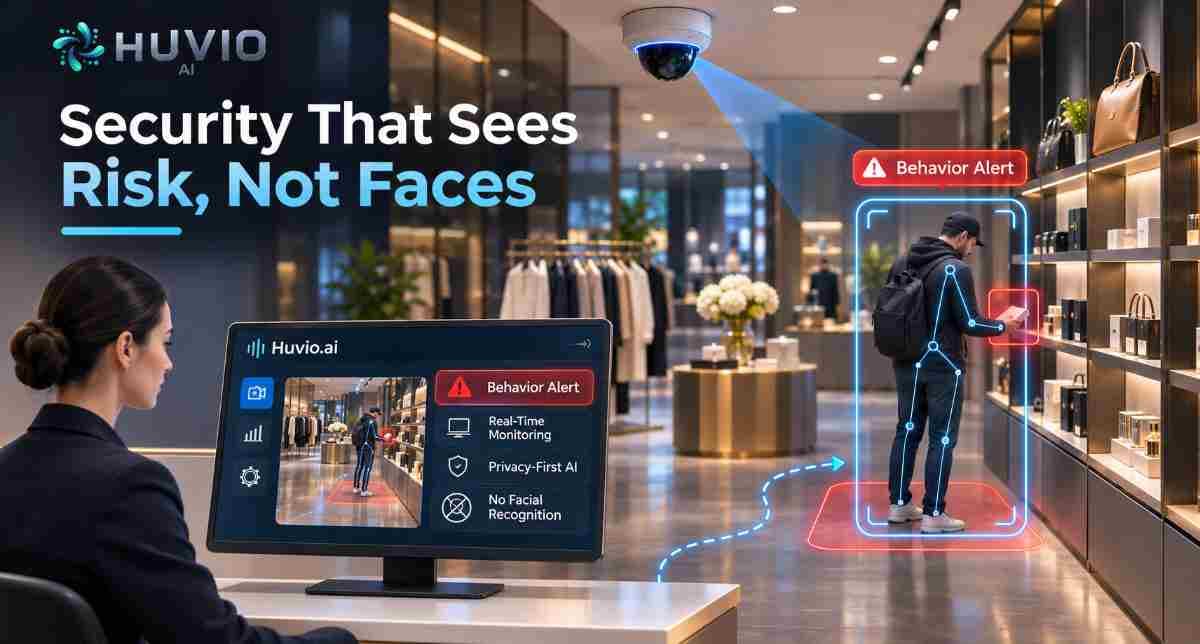
A welcoming store lets people explore freely and helps employees feel confident doing their jobs. Security matters, but so does how it fits into the experience. Modern retailers are discovering that ai-powered surveillance can help teams understand activity around their shelves and displays without identifying customers by their faces. Instead of concentrating on who a visitor is, the better starting question is what is happening in the store and whether it needs a closer look.
A Better Question for Modern Store Protection
Walk through a busy boutique, pharmacy, supermarket, or electronics showroom, and you will see dozens of ordinary interactions: picking up products, comparing labels, asking for help, and returning items to shelves. Most deserve no special attention. Store managers evaluating retail security solutions need tools that fit this everyday reality rather than making customers feel watched or judged. Meaningful protection should support a safe environment while preserving the relaxed, personal service people expect from a neighborhood shop or familiar retail chain.
The distinction between observing behavior and recognizing identity is important. Facial recognition attempts to match a face to a person or identity record; behavioral monitoring examines activity visible in a camera view. These are different technical approaches, with different implications for shoppers. When considering ai retail theft detection, a retailer can ask how the software identifies potentially relevant events, what triggers a notification, and how an employee checks the context. Those questions put practical judgment before assumptions about any individual. This distinction is also central to understanding how AI can detect potential retail theft through behavioral patterns.
What Behavior-Focused Monitoring Actually Means
Imagine a premium display area on a crowded afternoon. The store is not trying to learn every visitor's name. It needs to know whether an unusual interaction near valuable merchandise deserves attention while staff are helping other customers. With ai retail security systems, relevant camera activity may be surfaced for an authorized person to examine. That is a more useful role for technology than pretending a computer can know someone's intentions. A notification should begin a careful review, never finish it.
A useful monitoring approach starts with clear camera views and an understanding of normal store routines. For example, customers may pick up several products during a comparison, and employees may carry merchandise between a counter and a stockroom. A thoughtful retail surveillance system helps the team assess visible circumstances instead of labeling everyday movement as wrongdoing. Staff who understand the layout, customer flow, and store procedures can interpret alerts with the judgment that software alone cannot provide.
Help Employees Notice the Moment That Matters
The busiest part of a retail shift can also be the hardest time to watch every important area. Associates may be processing payments, restocking shelves, or demonstrating a product. At those moments, ai video surveillance can provide an additional source of awareness by highlighting activity that may need review. It does not remove the need for attentive employees. Its value is in helping a team find the right moment sooner, without expecting one person to keep watching multiple video streams continuously.
When an alert arrives, the first response should be calm and proportionate. Staff might review a short clip, check the relevant display, or offer assistance to someone nearby. An ai video surveillance system can support this process when the notification is connected to a clear camera location and useful incident details. A well-understood response plan reduces uncertainty for employees and keeps service professional. The customer experience is stronger when the team uses information discreetly rather than reacting publicly to an unverified signal.
Make Every Camera View More Useful
Smart monitoring depends on the quality and placement of cameras already serving the store. A camera directed toward a reflective window may capture less useful detail than one positioned for a clear view of the merchandise area. Managers reviewing retail store video surveillance should walk through the shop during real business hours and note lighting changes, crowding, blind spots, and the movement of carts or display stands. A careful setup creates better context for human review and helps retailers avoid unnecessary equipment changes.
Different spaces require different attention. An open cosmetics shelf, a small jewelry counter, and a grocery self-checkout each have their own traffic patterns and service routines. With retail video surveillance, the aim should be to see enough of the surrounding activity to make sense of an event, not to place a camera in every possible corner. Monitoring plans should respect spaces where customers reasonably expect greater privacy, and access to footage should remain limited to people who need it for their work.
From an Alert to an Informed Response
A notification has little practical value if nobody knows what to do next. Store teams need a straightforward process: identify the location, review the available context, determine whether action is necessary, and record the outcome when appropriate. Good retail security software supports this flow with understandable incident information. The process should be clear enough that a busy shift supervisor can use it without interrupting every customer interaction.
Video-based alerts can support several reasonable outcomes. A team member may discover that the activity was routine, decide to offer help near a busy display, or ask a manager to review the event later. With ai retail theft prevention, the goal is to assist earlier, better-informed decisions, not to guarantee that every loss can be stopped. Human review is especially important when movement is ambiguous. Treating a possible event as an invitation to check facts helps maintain fairness and customer trust.
Security That Fits Around the Shopping Experience
Retailers work hard to create spaces where customers feel comfortable asking questions and spending time with products. Security works best when it quietly supports that environment. Store teams may explore ai security systems because they want stronger awareness without turning the sales floor into a series of barriers and interruptions. Clear procedures, respectful language, and discreet monitoring can help employees address concerns while continuing to provide the friendly attention that encourages customers to return. This people-first approach closely aligns with the role of AI retail security in creating better customer experiences.
Consider how a store manager introduces new monitoring tools to a team. Rather than framing every visitor as a possible threat, the manager can explain which areas need additional awareness, what a notification means, and why a person must check it. In that setting, retail theft prevention technology is one part of a wider plan that includes good customer service, sensible product placement, and consistent staff communication. Technology strengthens a routine that people already understand; it should not replace the human relationships behind successful retail.
Where Huvio AI Fits In
Huvio AI describes a real-time retail monitoring platform that examines video streams for patterns associated with suspicious activity. Its website highlights live camera views, incident alerts, saved clips, and reporting tools that authorized store teams can use to review events. For businesses comparing ai-powered video surveillance options, the important point is how these capabilities fit together during a normal working day. Managers can consider the store's existing cameras, team responsibilities, and the areas where faster access to relevant footage would help.
Huvio's published Privacy Policy states that its AI analyzes behavioral patterns and does not perform facial recognition or biometric identification. That gives retailers a clear starting point when discussing ai-powered surveillance with staff and stakeholders. It does not mean video footage is anonymous or that privacy obligations disappear; cameras can still capture recognizable people, and organizations remain responsible for appropriate use and notices. A good customer-facing explanation should be accurate about both the technology's strengths and its boundaries.
Start with the Areas Your Team Knows Best
A practical rollout does not require a retailer to rethink every shelf on day one. Begin with one or two areas where staff regularly need more information: a valuable display, a busy entrance, or a counter that becomes difficult to supervise during peak hours. When considering ai retail theft detection for these zones, managers can define what would make the work easier before comparing platforms. Useful objectives might include finding incident footage faster, clarifying who reviews alerts, or making shift handovers more consistent.
The best camera plan will vary with the size of the store and the types of products sold. Retailers searching for the best ai security cameras for retail stores should not assume a single model will work equally well under bright showroom lights, behind glass, and near crowded aisles. A demonstration using real store conditions can show whether a proposed viewing angle provides enough context. Camera quality, integration needs, and the ease of incident review deserve more attention than an impressive list of features alone.
Give the Team Confidence, Not More Noise
Employees need to understand why an alert appears and what is expected of them. Without a simple routine, even useful notifications can become distractions. An approach built around ai powered surveillance systems should define who is responsible for reviewing alerts, how urgent situations are escalated, and when a record should be saved for follow-up. The goal is not to flood the sales floor with messages; it is to help the right person act on the right information while colleagues continue serving customers. Thoughtful notification management matters because alert fatigue can weaken the effectiveness of retail security
Training can focus on realistic situations instead of dramatic examples. Team members can practice opening a clip, locating the relevant camera view, and recognizing the difference between an uncertain signal and a confirmed incident. Retailers considering artificial intelligence security cameras should also ask who can access footage and how permissions are managed. These everyday details help employees feel prepared. They also show shoppers that a store takes care with information, not just with its merchandise.
Choose Tools for Clarity and Everyday Fit
A technology purchase becomes easier when store owners compare workflows rather than marketing labels. A retailer looking for the best ai surveillance software might first ask how quickly someone can understand an alert, whether relevant footage is easy to find, and what the platform actually does with the video. The right answer depends on the store's staffing, layout, existing cameras, and service priorities. Clear answers help a business select tools with confidence instead of relying on claims of perfect detection.
Likewise, two solutions that sound similar can offer very different day-to-day experiences. For retailers comparing ai retail security systems, a useful demonstration starts with ordinary store activity and follows a potential incident from the camera view to the notification and the human review. The team should be able to see what information is available and where a decision belongs. A system that makes the process understandable is better positioned to support employees over the long term.
Measure Progress Without Losing Perspective
After introducing a new monitoring routine, retailers can look at practical changes rather than promising instant results. How long does it take to review a flagged incident? Are supervisors able to find the right clip? Does the team feel confident about when to offer assistance or escalate a concern? These are helpful questions when evaluating retail security solutions in the store's own environment.
It also helps to ask whether the monitoring experience remains comfortable for customers and manageable for employees. A good approach to ai retail theft prevention should support awareness while leaving room for reasonable judgment, friendly service, and appropriate privacy protections. The presence of technology does not make uncertainty disappear. What matters is how calmly and consistently a team uses the information it receives, and whether the system continues to fit the way the store actually operates.
A More Thoughtful Way Forward
Retail security does not have to begin with identifying every person who walks through the door. Stores can focus on useful video context, responsible alerts, and trained teams who understand what to do next. When retail store video surveillance works together with thoughtful processes, it can help make important events easier to notice and review. Huvio AI offers retailers a behavior-focused option to evaluate within that broader approach, with documented real-time monitoring, incident review, and a clear statement that it does not use facial recognition.
See how Huvio AI supports thoughtful, real-time store monitoring: https://huvio.ai/