
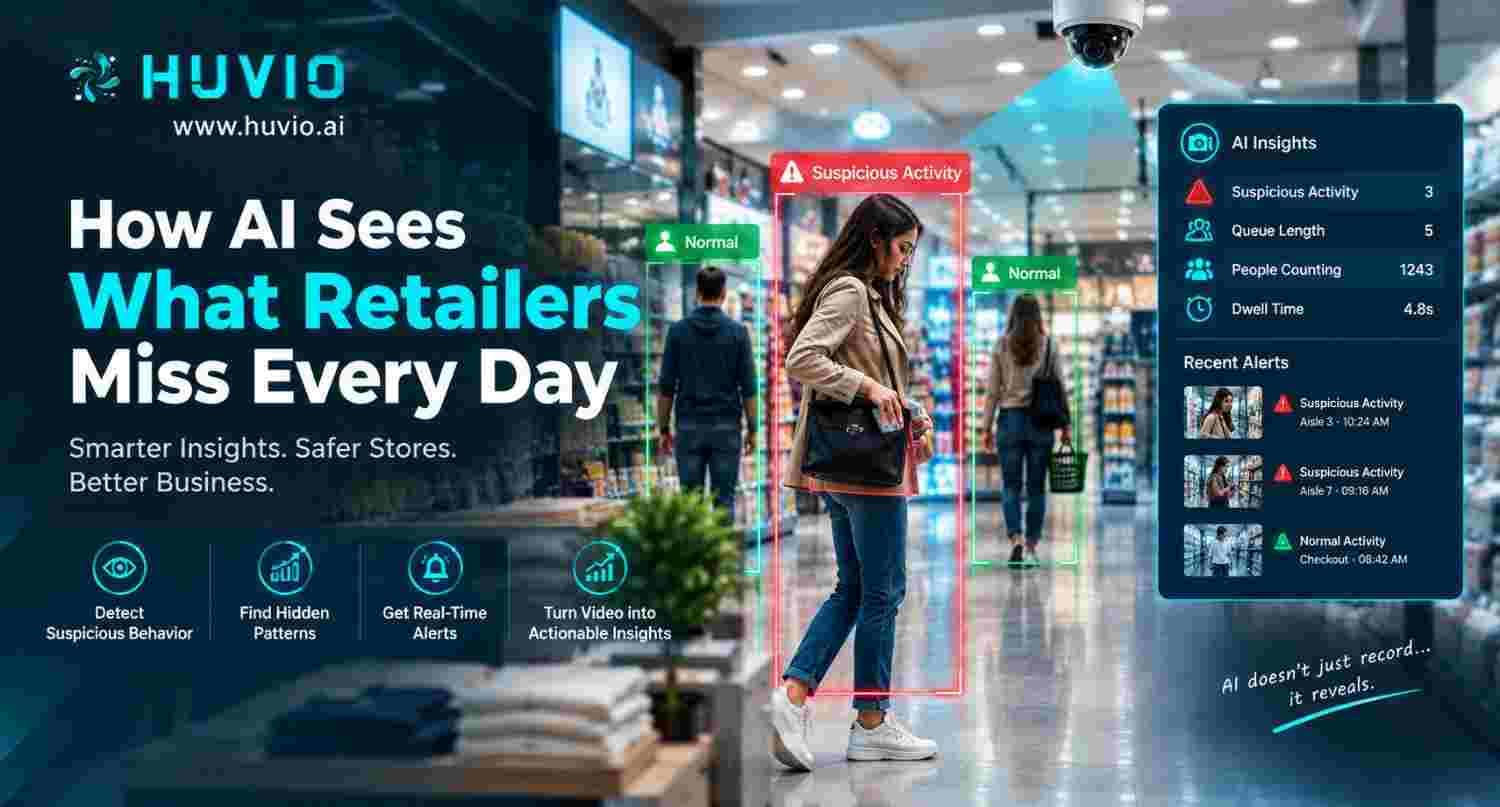
Just walk into any store, and you will find cameras monitoring different locations, such as entrances, aisles, counters, stockrooms, and parking lots. Retailers have spent thousands of dollars on the security of their stores using retail security solutions. Those surveillance systems are often used primarily for reviewing incidents after something has happened.
Most retailers use only a fraction of the information their cameras capture every day. While security footage records thousands of customer interactions, operational bottlenecks, merchandising issues, and theft risks, much of that data remains invisible to decision-makers.
This is where AI retail analytics is changing the game.
AI surveillance not only records video but also analyzes footage in real time. It transforms ordinary security cameras into powerful intelligence tools. Retailers can identify customer behaviors, operational inefficiencies, and suspicious activity in time to take action.
The 95% of Store Data Most Retailers Never See
Traditional surveillance systems are passive.
These systems work by capturing footage rather than interpreting it. The camera watches everything; for instance, a customer abandons a purchase because of a long line at checkout, or a shopper consistently ignores a particular product. Suspicious behaviors may also occur before a theft. Traditional cameras record these activities, but managers often do not have enough time to watch hundreds of hours of footage every week. As a result, much of the operational data hidden inside those videos is never analysed. Modern retail theft prevention technology can help retailers identify relevant patterns and respond more effectively.
Modern retail video analytics solves this problem by using computer vision and artificial intelligence to automatically detect patterns, behaviors, and events across camera feeds. Cameras become intelligent sensors capable of continuously monitoring store activity and delivering actionable insights through AI video surveillance.
Those insights can only be as complete as the footage available, making camera placement across retail locations an important factor in consistent analytics.
The result is a shift from simply recording what happened to understanding what is happening right now.
What AI Can See That Humans Often Miss
Human observation has limits.
A manager can monitor only one place at a time, and security teams cannot watch dozens of video feeds continuously without fatigue. Incidents often go unnoticed until they begin affecting revenue. But AI changes that by continuously analyzing video data at scale, including footage captured by artificial intelligence security cameras.
Customer Flow Patterns
Many retailers assume they know how customers move through their stores. In reality, customer journeys often differ significantly from expectations.
AI can identify:
· High-traffic zones
· Underperforming areas
· Customer bottlenecks
· Popular product sections
· Store navigation patterns
These insights help retailers optimize layouts, improve merchandising, and increase customer engagement.
Queue Management
Customers are often in a rush, and long queues can quickly create frustration. These waits can become one of the fastest ways to lose sales. Customers who encounter crowded checkout lines frequently abandon purchases or leave with a negative impression of the store.
AI retail analytics can help retailers address this problem by providing real-time alerts when queues exceed defined thresholds. Managers can quickly deploy additional staff before customer frustration builds. With an AI video surveillance system, stores can use live camera feeds to monitor activity and identify operational issues more efficiently.
The same queue and traffic patterns also contribute to retail video business intelligence, helping managers connect on-floor activity with broader operational performance.
Suspicious Behavior Detection
Traditional security systems are reactive. By the time footage is reviewed, losses may already have occurred. AI-powered video surveillance can identify suspicious behaviors as they happen, allowing store teams to intervene earlier and potentially prevent incidents before they escalate. This proactive approach is becoming increasingly important as retailers face growing theft-related challenges worldwide.
Identifying an unusual pattern does not establish intent, which is why AI-based theft prediction must be paired with context and human review.
Staffing Optimization
Many retailers rely on schedules built around assumptions. AI retail analytics provides real data about peak shopping times, customer traffic, long queues, and busy store areas, enabling smarter staffing decisions. By analyzing these patterns, retailers can allocate employees more effectively, improve service, and reduce unnecessary staffing costs during quieter periods.
Why Retail Intelligence Matters More Than Ever
Retailing has never been more competitive.
Consumers demand a flawless experience. Labour costs continue to climb. Margins remain narrow. At the same time, businesses must deal with theft, inventory issues, and changing customer behaviors.
Success increasingly depends on making faster and more precise decisions.
The difficulty is that many judgments are still made based on intuition, delayed reporting, or inadequate data.
This is where retail intelligence can provide a competitive advantage.
By translating live footage into usable insights, AI assists merchants in understanding what is happening in their businesses in real time. Rather than reacting to problems after they occur, organizations can discover opportunities and solve difficulties as they arise. These capabilities can complement existing retail store video surveillance infrastructure, helping businesses extract more value from their current investments.
From Security Cameras to Business Intelligence
One of the most common misconceptions regarding AI in retail is that it requires costly new technology.
In truth, many modern AI solutions integrate with the camera systems that retailers already have.
Existing surveillance infrastructure can be converted into an operational intelligence platform without changing every camera in the facility. This significantly reduces adoption costs while increasing the value of earlier technological investments.
Rather than functioning solely as security tools, cameras become business intelligence assets capable of supporting:
· Loss prevention
· Customer experience improvement
· Operational optimization
· Performance measurement
· Strategic decision-making
With modern AI security systems, retailers can bring security monitoring and operational insights closer together, making it easier to identify issues and respond quickly.
This evolution represents one of the most significant shifts in retail technology today.
How Huvio AI Unlocks the Value Hidden in Every Camera
At Huvio AI, we believe shops should not have to deploy completely new systems to acquire valuable information.
Most stores already have the infrastructure required to provide significant intelligence. The challenge isn't gathering data; it's analyzing it.
Huvio AI converts existing camera networks into intelligent monitoring systems that offer real-time insight into retail operations. Advanced AI-powered video analysis enables merchants to detect suspicious activity, discover operational inefficiencies, monitor customer movement patterns, and receive immediate notifications when they are most needed.
Instead of spending hours studying footage, teams can get the information they need automatically. By combining retail security software with video-based operational intelligence, retailers can improve their ability to monitor store activity and make informed decisions. This provides faster responses, more effective loss prevention, increased operational efficiency, and better customer experiences.
Conclusion
Retailers have spent several years investing in surveillance technologies. The next stage is to unleash their full potential. The stores that gain an advantage in the coming years will not always be those with the most cameras. They will be the ones who know how to turn video into intelligence.
AI retail analytics is helping retailers move beyond simple monitoring toward a future powered by real-time decision-making. Modern AI retail security systems can support this transformation by connecting surveillance data with practical business insights, while AI retail theft detection can help store teams recognize suspicious activity sooner.
The information is already present.
Customers are already creating it.
The cameras have already captured it.
The question is no longer whether your store has the data.
It depends on whether you use it.
With intelligent retail video analytics and advanced retail intelligence platforms like Huvio AI, retailers can finally see what they've been missing every day and turn those insights into measurable business results.
Secure Your Retail Stores Now: https://huvio.ai/